Explore And Heal Your Mind soul and body here at MystiConnect!

Why Different Bodies React Differently to Herbs
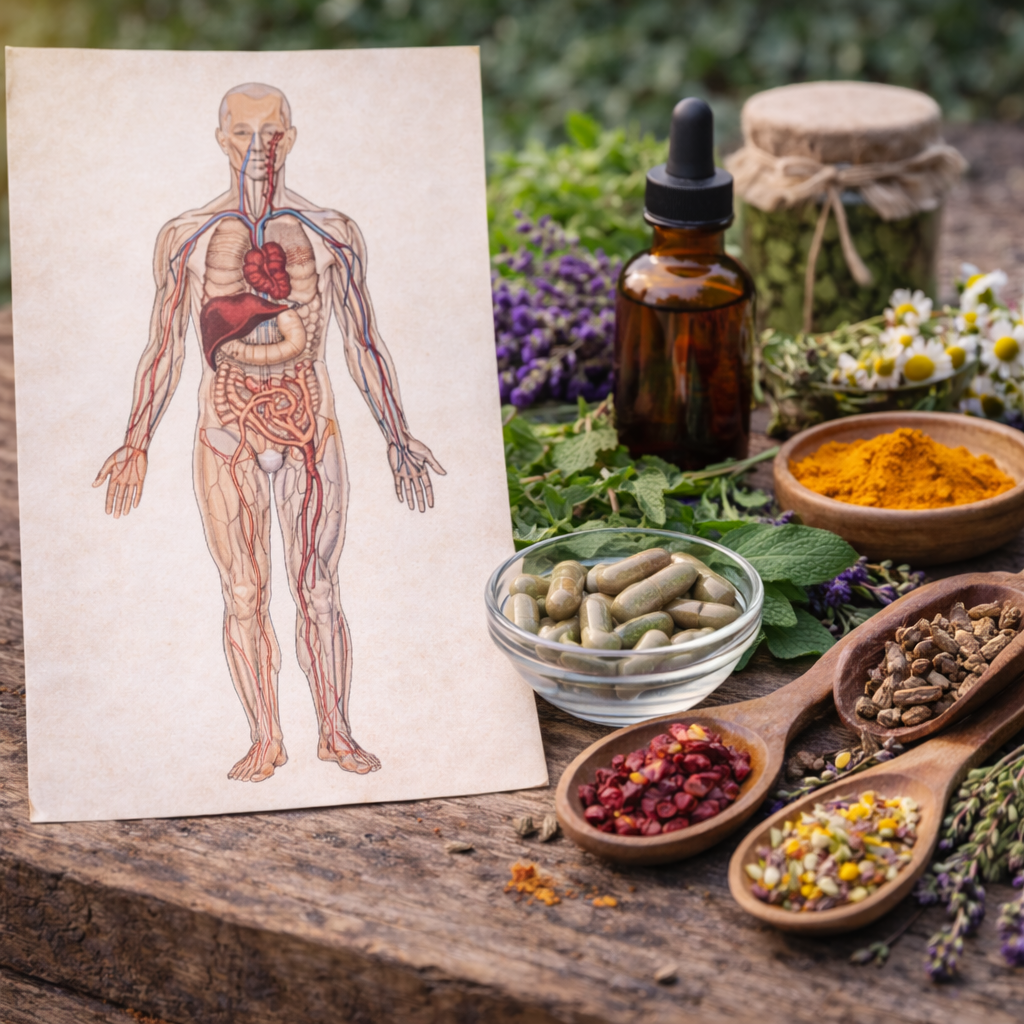
One person takes an herb and feels calm, energized, and balanced. Another takes the same herb and feels nothing—or feels worse. This isn’t inconsistency in herbal medicine. It’s individual physiology. Understanding why different bodies react differently to herbs is one of the most important foundations of herbal healing. It explains why personalization matters, why copy-paste protocols fail, and why listening to the body is more important than following trends.
Landon Thorne
12/31/20253 min read
The Core Truth of Herbal Medicine
Herbs do not act on the body.
They act with the body.
Because every body has a unique internal landscape—shaped by genetics, stress, environment, history, and nervous system tone—herbs interact differently in each person.
This variability is not a flaw.
It is the reason herbal medicine can be so precise when used correctly.
Factors That Influence How Herbs Affect You
1. Nervous System State
The nervous system is the master regulator.
A body stuck in fight-or-flight will react very differently to herbs than a body in a regulated, rested state.
Stimulating herbs may increase anxiety in an already activated system
Calming herbs may feel sedating to a depleted system
Gentle nervines may feel powerful to sensitive individuals
Herbs amplify the current state of the nervous system before they regulate it.
2. Energetic Constitution (Hot / Cold, Dry / Moist)
Every body has energetic tendencies.
Some people run:
Hot and inflamed
Cold and sluggish
Dry and depleted
Damp and congested
An herb that balances one pattern can worsen another.
For example:
A warming herb may restore circulation in a cold body
The same herb may cause irritability or insomnia in a hot body
Energetics explain why the same symptom can require different herbs.
3. Digestive Strength and Absorption
Herbs must be absorbed to work.
If digestion is weak:
Capsules may not break down well
Powders may pass through unused
Teas may work better than pills
If digestion is strong:
Capsules may work reliably
Strong bitters may feel intense
The gut determines how much of an herb actually enters circulation.
4. Liver and Detox Capacity
The liver processes both herbs and their metabolites.
If detox pathways are overwhelmed:
Herbs may feel too strong
Side effects may appear quickly
Fatigue or headaches may occur
This doesn’t mean the herb is “bad.”
It means the body’s processing capacity needs support first.
5. Sensitivity and Trauma History
Highly sensitive systems often respond more strongly to herbs.
Contributing factors include:
Trauma history
Chronic stress
Nervous system dysregulation
Autoimmune conditions
These bodies often need:
Lower doses
Slower introduction
Fewer herbs at once
Sensitivity is not weakness—it is heightened responsiveness.
6. Timing and Readiness
The same herb can feel different at different times in the same person.
Why?
Hormonal cycles
Stress levels
Sleep quality
Emotional processing
Seasonal changes
An herb may not “work” until the body is ready to receive its signal.
Herbal medicine works in relationship with timing, not force.
Why One-Size-Fits-All Protocols Fail
Most modern supplement advice ignores individuality.
Problems with standardized protocols:
Ignore nervous system differences
Ignore energetics
Ignore digestion and absorption
Ignore history and sensitivity
This leads people to believe:
“Herbs don’t work for me.”
In reality, the approach didn’t fit the body.
Herbs Don’t Create Reactions — They Reveal Patterns
This is a crucial reframe.
When an herb causes:
Anxiety
Fatigue
Digestive upset
Emotional release
It is often revealing an existing imbalance, not creating a new one.
Herbs act like mirrors:
Showing where regulation is fragile
Highlighting what needs support first
This feedback is information, not failure.
Science Supports Individual Variation
Modern research confirms what herbalists have always known.
Differences in:
Genetics
Enzyme activity
Microbiome composition
Neurotransmitter sensitivity
All affect how substances—including herbs—are processed.
Personalized medicine is not new.
Herbal medicine has always practiced it.
Spiritual + Energetic Perspective
On a deeper level, herbs meet people where they are.
They don’t override readiness.
They don’t bypass lessons.
They don’t skip integration.
Herbal medicine honors the intelligence of the body—and that intelligence is unique in every person.
Healing is not standardized.
It is relational.
How to Work With Your Body Instead of Against It
Start Low
Let the body introduce itself before increasing dosage.
Change One Thing at a Time
Multiple herbs obscure feedback.
Track Subtle Shifts
Energy, sleep, mood, digestion matter more than dramatic effects.
Adjust Based on Response
Dosage, form, or herb choice—not abandonment.
Respect Your Nervous System
Calm regulation always comes before stimulation.
When a “Negative Reaction” Is Actually Progress
Sometimes discomfort means:
Stored tension is releasing
The nervous system is recalibrating
Detox pathways are activating
Emotional processing is beginning
The key is proportionality:
Mild, temporary shifts can be normal
Strong or persistent reactions mean adjust or stop
Herbal medicine is a dialogue, not a command.
Final Thoughts
Different bodies react differently to herbs because different bodies need different support.
Herbal medicine is not about finding the “best herb.”
It’s about finding the right relationship between plant, body, timing, and dosage.
When herbs are matched correctly, they don’t feel dramatic.
They feel like the body recognizing something it already understands.
That’s not inconsistency.
That’s intelligence.

Explore
Discover the latest in psychedelics, spirituality, and holistic practices.
Connect
MystiConnect Email:
Owners@MystiConnect.com
© 2026. All rights reserved.
Disclaimer:
The information provided on this website is for informational purposes only and is not intended as medical advice. We are not doctors, and none of the products or statements have been evaluated by the FDA. Always consult with a healthcare professional before starting any new health regimen.
Terms of service
Mystiphone... Coming Soon!