Explore And Heal Your Mind soul and body here at MystiConnect!
What is Herbal Medicine?
Long before modern pharmaceuticals existed, humans turned to plants for healing, nourishment, and resilience. Herbal medicine is the practice of using plants to support the body’s natural ability to heal, regulate, and restore balance. Today, as many people search for gentler, more holistic approaches to health, herbal medicine is experiencing a powerful resurgence. In this article, you’ll learn what herbal medicine truly is, how it works, why it has endured across cultures, and how it fits into modern science and holistic healing.
Landon Thorne
12/30/20252 min read
What Is Herbal Medicine?
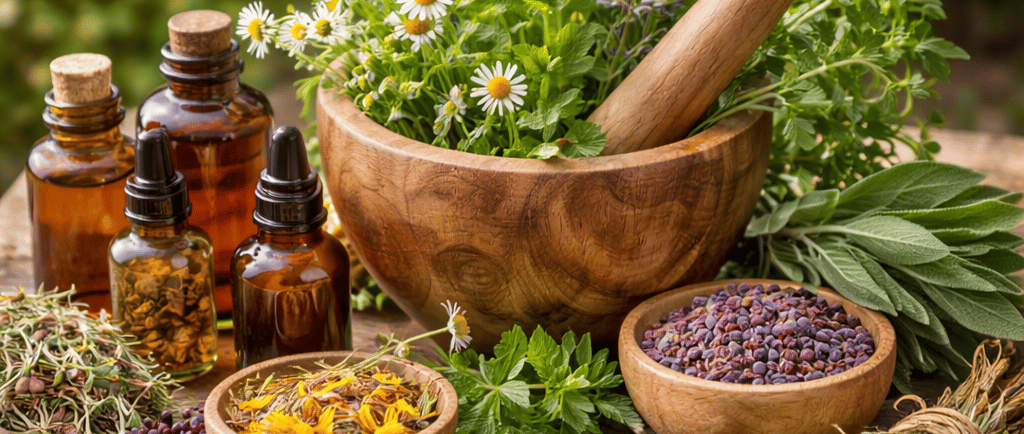
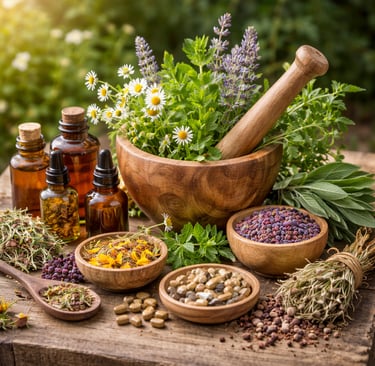
Herbal medicine is a system of healing that uses plants and plant extracts—such as leaves, roots, flowers, seeds, and bark—to support physical, emotional, and energetic health.
Rather than targeting symptoms in isolation, herbal medicine focuses on supporting the whole system. Herbs work with the body’s physiology, encouraging balance in processes like digestion, immunity, circulation, hormone regulation, and nervous system function.
At its core, herbal medicine views the body as intelligent and self-regulating, with plants acting as allies rather than replacements for natural function.
The Benefits of Herbal Medicine
Works With the Body, Not Against It
Herbs support the body’s innate healing mechanisms instead of overriding them.
Addresses Root Causes
Rather than suppressing symptoms, herbal medicine seeks to correct underlying imbalances.
Supports Long-Term Health
Many herbs are gentle enough for consistent use, building resilience over time.
Holistic by Nature
Herbs often support multiple systems at once—such as digestion, mood, and immunity.
Customizable to the Individual
Herbal protocols can be adapted to constitution, lifestyle, and environment.
Integrates Physical and Emotional Health
Many herbs influence both the nervous system and the body simultaneously.
Backed by Both Tradition and Science
Thousands of years of use now meet modern pharmacological research.
How Herbal Medicine Works (Science + Physiology)
Plants contain complex arrays of bioactive compounds—including alkaloids, flavonoids, terpenes, glycosides, polysaccharides, and minerals. These compounds interact with the body in subtle but powerful ways.
Unlike single-molecule drugs, herbs work through synergy. Multiple compounds act together to influence:
Enzyme activity
Neurotransmitter signaling
Immune modulation
Hormone metabolism
Inflammation pathways
Tissue repair and circulation
This complexity allows herbs to regulate systems rather than force outcomes. For example, an adaptogenic herb may calm stress when cortisol is high, yet support energy when it’s low—depending on the body’s needs.
Modern science increasingly recognizes this systems-based approach as essential for chronic, multifactorial conditions.
Spiritual + Energetic Perspective
From a holistic standpoint, herbal medicine is not only biochemical—it is relational.
Plants grow within ecosystems, responding to stress, sunlight, soil, and time. When used as medicine, they carry patterns of adaptation, resilience, and balance that resonate with the human body.
Energetically, herbs are often described as:
Warming or cooling
Drying or moistening
Grounding or uplifting
These qualities help restore balance in both physical and emotional states. Many traditions view herbal medicine as a partnership—where healing emerges through listening, intention, and respect rather than control.
How Herbal Medicine Is Used
Herbs can be prepared and taken in many forms, depending on the goal and the plant.
Common Herbal Preparations
Teas and infusions
Decoctions (long-simmered roots and barks)
Tinctures (alcohol or glycerin extracts)
Capsules and powders
Oils, salves, and topical applications
How Herbs Are Chosen
Based on symptoms and underlying patterns
Matched to constitution and sensitivity
Used alone or in synergistic formulas
Adjusted over time as the body responds
Herbal medicine is as much about timing and dosage as it is about the plant itself.
Safety, Side Effects, and Precautions
Herbal medicine is powerful—and should be used with respect.
Not all herbs are appropriate for everyone
Some herbs interact with medications
Dosage and duration matter
Quality and correct identification are essential
Professional guidance is important for complex conditions
When used responsibly, herbal medicine is among the safest long-term healing systems available.
Tips for Beginners
Start with gentle, well-known herbs
Use one or two herbs at a time initially
Track how your body responds
Prioritize quality sourcing
Learn the difference between tonic herbs and acute remedies
Herbal medicine rewards patience, consistency, and awareness.
Final Thoughts
Herbal medicine is not an alternative to healing—it is one of humanity’s oldest foundations of medicine. Rooted in nature, refined through tradition, and increasingly validated by science, it offers a way to heal that honors the body’s intelligence rather than overriding it.
As modern life grows more complex, herbal medicine reminds us that balance, resilience, and health often begin with simplicity, relationship, and respect for nature.

Explore
Discover the latest in psychedelics, spirituality, and holistic practices.
Connect
MystiConnect Email:
Owners@MystiConnect.com
© 2026. All rights reserved.
Disclaimer:
The information provided on this website is for informational purposes only and is not intended as medical advice. We are not doctors, and none of the products or statements have been evaluated by the FDA. Always consult with a healthcare professional before starting any new health regimen.
Terms of service
Mystiphone... Coming Soon!