Explore And Heal Your Mind soul and body here at MystiConnect!

What Is an Adaptogen?
Stress is not the problem. Unresolved stress is. Adaptogens are a unique class of herbs that help the body adapt to stress, restore balance, and rebuild resilience over time. Rather than forcing stimulation or sedation, adaptogens work intelligently—supporting the body exactly where it is depleted or overwhelmed. In this foundational guide, you’ll learn what adaptogens are, how they work in the body, and why they are considered one of the most important pillars of modern herbal medicine.
Landon Thorne
12/30/20252 min read
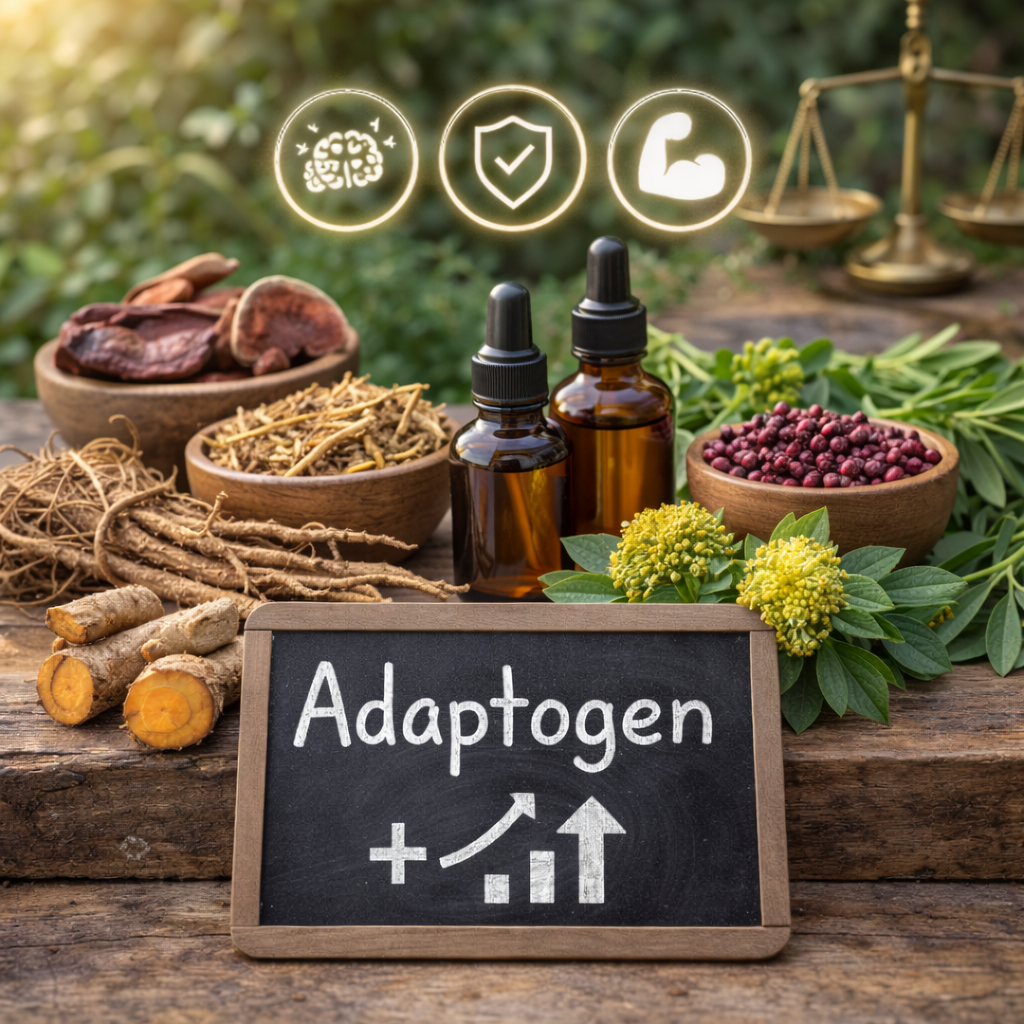
What Is an Adaptogen?
An adaptogen is a plant that helps the body regulate its response to physical, emotional, and environmental stress.
To be classified as an adaptogen, an herb must meet three core criteria:
It increases resistance to stress (physical, mental, or emotional)
It supports balance rather than pushing the body in one direction
It is non-toxic and safe for long-term use
Adaptogens do not target a single symptom. Instead, they support the stress-response system as a whole, helping the body return to equilibrium.
The Benefits of Adaptogens
Improve Stress Resilience
Help the body handle stress without burnout or collapse.
Balance Energy Levels
Support both fatigue and overstimulation depending on need.
Support the Nervous System
Reduce stress reactivity while maintaining clarity and focus.
Regulate Hormones
Support healthy cortisol rhythms and endocrine balance.
Enhance Mental Performance
Improve focus, cognition, and stress-related brain fog.
Support Immune Function
Help normalize immune response under chronic stress.
Promote Long-Term Vitality
Strengthen the body over time rather than offering short-term relief.
How Adaptogens Work (Science + Physiology)
Adaptogens primarily act on the hypothalamic–pituitary–adrenal (HPA) axis, the system that governs how the body responds to stress.
When stress is chronic, the HPA axis can become:
Overactivated → anxiety, inflammation, insomnia
Suppressed → fatigue, low motivation, depression
Adaptogens help normalize this system rather than stimulating or suppressing it.
Key mechanisms include:
Modulating cortisol production
Supporting mitochondrial energy output
Reducing stress-induced inflammation
Protecting neurons from stress damage
Improving cellular communication
This is why adaptogens can feel calming to one person and energizing to another—they respond to imbalance, not labels.
Adaptogens vs Stimulants
This distinction is critical.
Stimulants:
Force energy output
Drain reserves over time
Create crashes and dependency
Adaptogens:
Build energy capacity
Restore reserves
Improve baseline resilience
Adaptogens don’t give energy—they restore the body’s ability to generate it sustainably.
Adaptogens vs Sedatives
Adaptogens are also not sedatives.
Sedatives suppress stress signals.
Adaptogens retrain the stress response.
This is why adaptogens can:
Calm anxiety without causing drowsiness
Improve sleep without sedation
Enhance focus without stimulation
They strengthen regulation instead of numbing sensation.
Adaptogens Work Slowly (By Design)
Adaptogens are tonics, not emergency remedies.
They work through:
Nervous system recalibration
Hormonal rhythm correction
Mitochondrial repair
Immune normalization
Results often appear gradually over weeks—not hours. This slow action is what makes their effects durable and sustainable.
Spiritual + Energetic Perspective
Energetically, adaptogens teach adaptability.
They support:
Grounded resilience instead of force
Flexibility instead of rigidity
Endurance instead of burnout
In traditional systems, adaptogens were used to help people withstand harsh environments, long journeys, emotional strain, and spiritual trials.
They restore inner stability, allowing growth without collapse.
Who Benefits Most from Adaptogens?
Adaptogens are especially helpful when:
Stress is chronic or cumulative
Energy fluctuates unpredictably
Burnout is present
Sleep is disrupted by stress
Focus declines under pressure
Recovery feels incomplete
They are not quick fixes—but they are unmatched for long-term nervous system repair.
How Adaptogens Are Used
Common Forms
Tinctures
Powders
Capsules
Teas and decoctions
How They’re Taken
Daily, consistently
Often in the morning or early afternoon
Used for weeks to months
Adjusted based on response
Adaptogens are often combined thoughtfully to balance warming/cooling and stimulating/calming effects.
Safety, Side Effects, and Precautions
Generally safe for long-term use
Effects are subtle but cumulative
Not all adaptogens are appropriate for every constitution
Some are stimulating, others calming
Professional guidance is helpful for complex conditions
More is not better with adaptogens—consistency beats intensity.
Tips for Beginners
Choose one adaptogen to start
Use daily for at least 2–4 weeks
Track energy, mood, and sleep
Avoid stacking multiple adaptogens initially
Support with sleep, nutrition, and stress reduction
Adaptogens amplify your lifestyle—good or bad.
Final Thoughts
Adaptogens are not miracle herbs. They are teachers of balance.
By strengthening the body’s ability to adapt, they don’t just reduce stress—they change how stress is experienced altogether. Over time, they rebuild resilience at the deepest levels of physiology.
In a world that constantly pushes the nervous system beyond its limits, adaptogens offer a different path: one of endurance, intelligence, and sustainable vitality.

Explore
Discover the latest in psychedelics, spirituality, and holistic practices.
Connect
MystiConnect Email:
Owners@MystiConnect.com
© 2026. All rights reserved.
Disclaimer:
The information provided on this website is for informational purposes only and is not intended as medical advice. We are not doctors, and none of the products or statements have been evaluated by the FDA. Always consult with a healthcare professional before starting any new health regimen.
Terms of service
Mystiphone... Coming Soon!