Explore And Heal Your Mind soul and body here at MystiConnect!

Rhodiola: The Resilience Herb for Energy, Focus, and Stress Adaptation
Modern stress doesn’t just exhaust the body—it dulls motivation, clouds focus, and drains emotional resilience. Many people feel mentally fatigued even when they’re physically rested. Rhodiola is a powerful adaptogenic herb known for restoring energy, mental clarity, and stress tolerance without overstimulation. This article explores what rhodiola is, its benefits, how it works in the body and brain, and how to use it safely for performance, mood, and resilience.
Landon Thorne
12/20/20253 min read
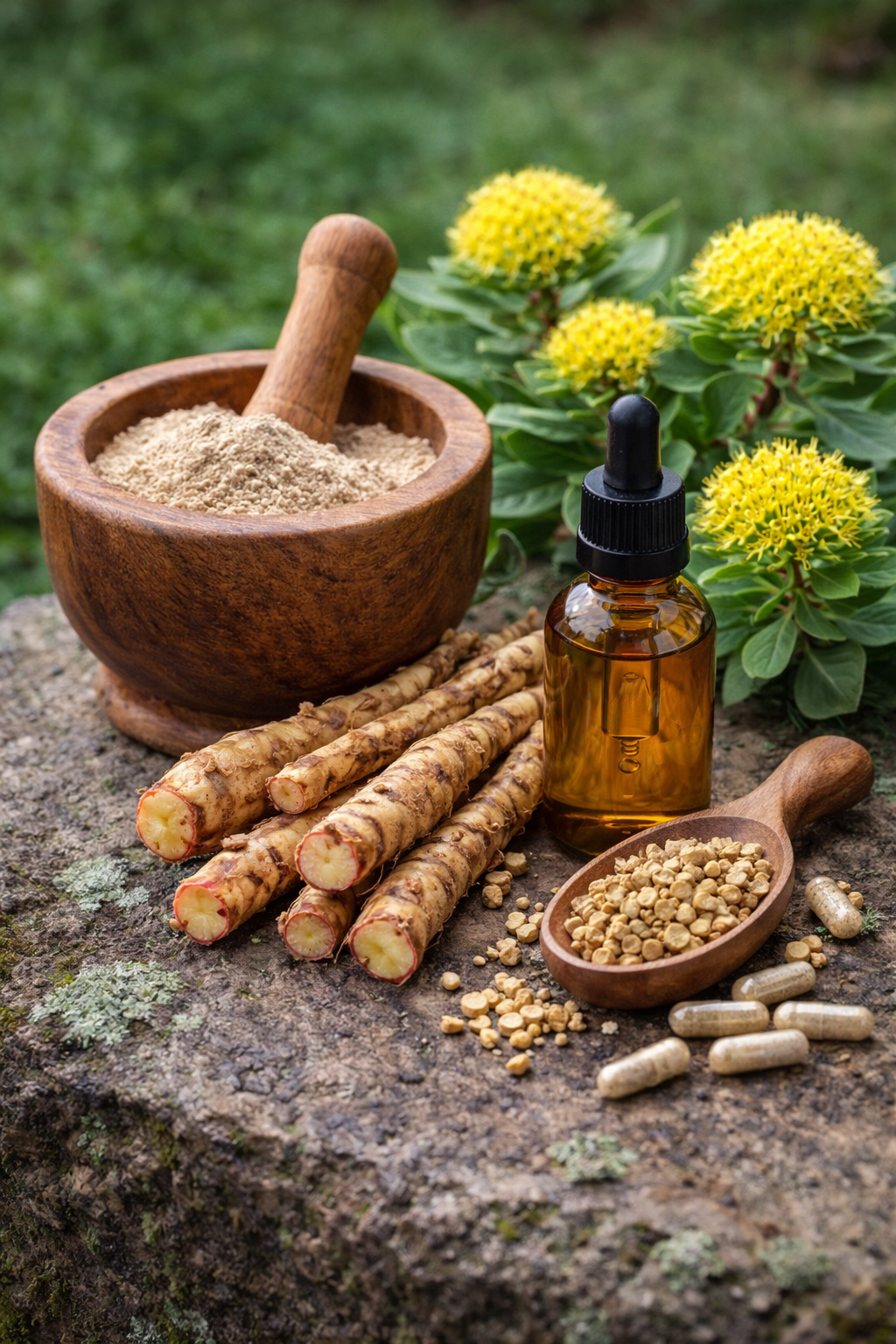
What Is Rhodiola?
Rhodiola (Rhodiola rosea) is an adaptogenic herb that grows in cold, mountainous regions of Europe and Asia. It has been used for centuries in traditional Russian, Scandinavian, and Eastern European medicine to enhance endurance, stamina, and mental strength.
The root is the primary medicinal part and is commonly taken as a standardized extract. Rhodiola is especially valued for improving stress resilience, cognitive performance, and fatigue resistance.
The Benefits of Rhodiola
Enhances Mental Energy and Focus
Rhodiola supports sustained mental clarity without the jittery effects of stimulants. It helps reduce brain fog and supports sharper focus under pressure.
Reduces Stress and Emotional Burnout
Rhodiola improves the body’s response to stress rather than simply suppressing it. This makes it especially helpful during periods of emotional overload, work stress, or burnout.
Improves Physical Endurance
Traditionally used by soldiers and athletes, rhodiola enhances physical stamina and reduces perceived exertion during demanding tasks.
Supports Mood and Motivation
Rhodiola has been shown to support dopamine and serotonin balance, contributing to improved mood, motivation, and emotional stability.
Reduces Fatigue
One of rhodiola’s strongest benefits is its ability to combat both mental and physical fatigue, especially fatigue caused by chronic stress.
Supports Cognitive Performance
Rhodiola enhances memory, learning capacity, and processing speed, particularly in stressful or sleep-deprived conditions.
Helps Regulate Cortisol
Rhodiola helps normalize cortisol rhythms, preventing both excessive stress hormone spikes and burnout-related depletion.
Supports Nervous System Resilience
Rather than sedating the nervous system, rhodiola increases its adaptability, allowing for faster recovery from stress.
How Rhodiola Works (Science + Physiology)
Rhodiola’s primary active compounds are rosavins and salidroside. These compounds influence stress-response pathways in the brain and body.
Rhodiola modulates the hypothalamic-pituitary-adrenal (HPA) axis, helping regulate cortisol secretion during stress. Unlike stimulants, it does not force energy production but improves cellular efficiency.
At the cellular level, rhodiola enhances mitochondrial ATP production, increasing energy availability while reducing oxidative stress. This contributes to improved endurance and mental performance.
In the brain, rhodiola influences neurotransmitters such as dopamine, serotonin, and norepinephrine, supporting motivation, mood, and cognitive flexibility. It also protects neurons from stress-induced damage by reducing inflammatory signaling and oxidative load.
Rhodiola’s effects are especially pronounced during acute or chronic stress, making it a true performance adaptogen.
Spiritual + Energetic Perspective
Energetically, rhodiola is considered an uplifting and strengthening herb. It supports the solar plexus chakra, associated with confidence, motivation, and personal power.
In traditional systems, rhodiola was used to cultivate endurance of both body and spirit—helping individuals remain centered, alert, and resilient in harsh conditions. Spiritually, it supports clarity during challenge and steadiness during transition.
Rather than calming downward like sedative herbs, rhodiola builds adaptive strength, helping the system rise to meet life’s demands without collapsing into stress.
How to Use Rhodiola
Common Forms
Standardized capsules or tablets
Liquid extracts or tinctures
Powdered root (less common due to bitterness)
Typical Dosage
Extract: 200–600 mg per day
(Standardized to ~3% rosavins and 1% salidroside)
Best Time to Take It
Morning or early afternoon
Avoid late evening use, as it may increase alertness
Rhodiola can be taken daily or cycled during periods of high stress or workload.
Safety, Side Effects, and Precautions
Generally well tolerated at recommended doses
May cause mild restlessness if taken too late in the day
Start with lower doses to assess sensitivity
Avoid combining with stimulants initially
Use caution with bipolar disorder or manic tendencies
Consult a professional if taking antidepressants
Tips for Beginners
Start with 200 mg and increase gradually
Choose standardized extracts for consistency
Take earlier in the day for best results
Use during high-demand periods rather than indefinitely
Pair with sleep, hydration, and stress-management practices
Final Thoughts
Rhodiola is a powerful ally for modern life—especially when stress, fatigue, and mental overload become the norm. It doesn’t numb stress or artificially stimulate energy. Instead, it strengthens the body’s capacity to adapt, perform, and recover.
When used mindfully, rhodiola helps restore confidence, clarity, and resilience—allowing energy to return naturally and sustainably.

Explore
Discover the latest in psychedelics, spirituality, and holistic practices.
Connect
MystiConnect Email:
Owners@MystiConnect.com
© 2026. All rights reserved.
Disclaimer:
The information provided on this website is for informational purposes only and is not intended as medical advice. We are not doctors, and none of the products or statements have been evaluated by the FDA. Always consult with a healthcare professional before starting any new health regimen.
Terms of service
Mystiphone... Coming Soon!