Explore And Heal Your Mind soul and body here at MystiConnect!

Holy Basil (Tulsi): The Sacred Adaptogen for Stress, Immunity, and Emotional Balance
Some plants are more than medicine—they are teachers. Holy basil, also known as tulsi, has been revered for thousands of years as a sacred herb that supports clarity, resilience, and inner peace. In a world defined by chronic stress and nervous system overload, holy basil offers a calm, steady return to balance. This article explores what holy basil is, its science-backed benefits, how it works in the body, and how to use it safely for stress, immunity, and emotional well-being.
Landon Thorne
12/20/20257 min read
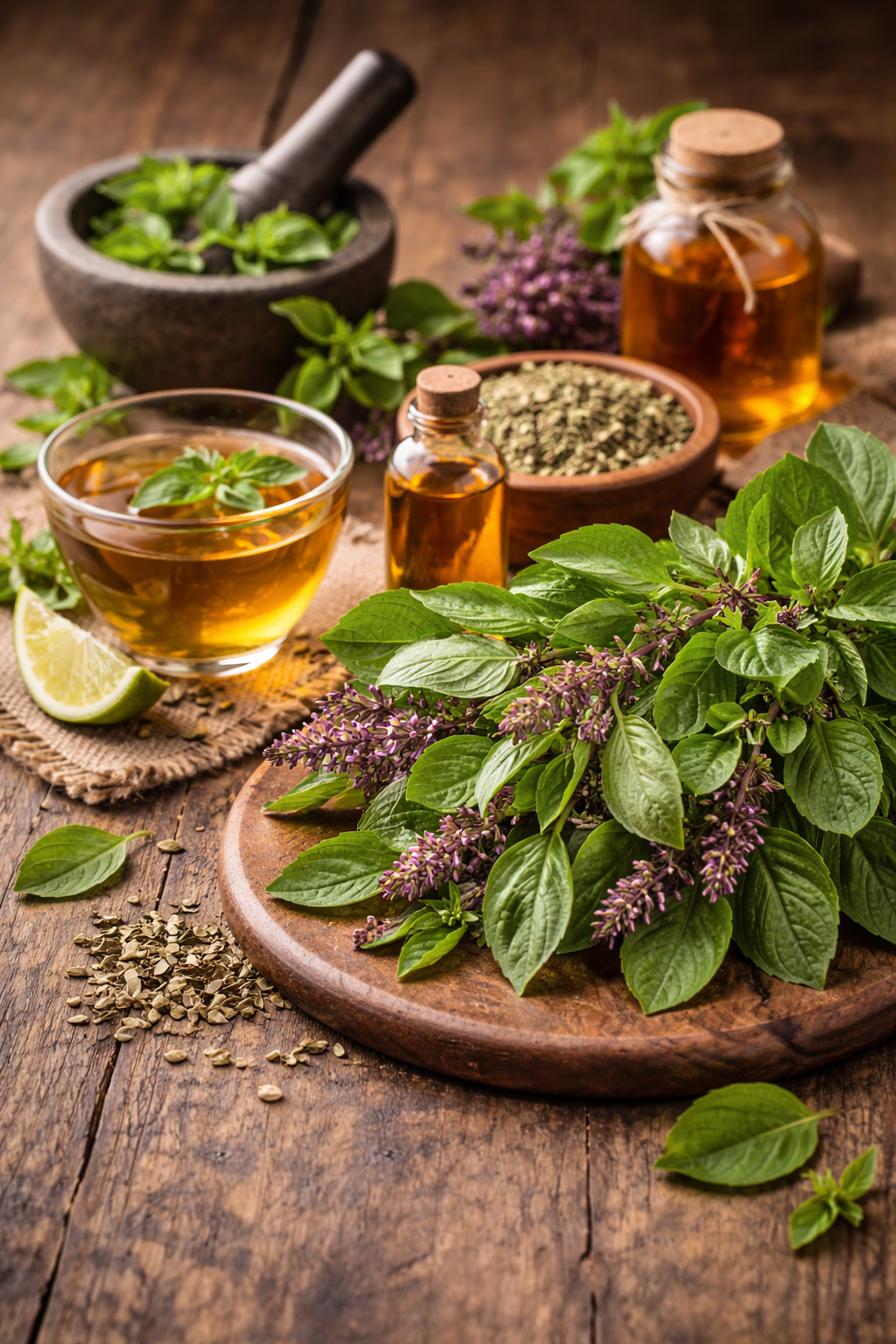
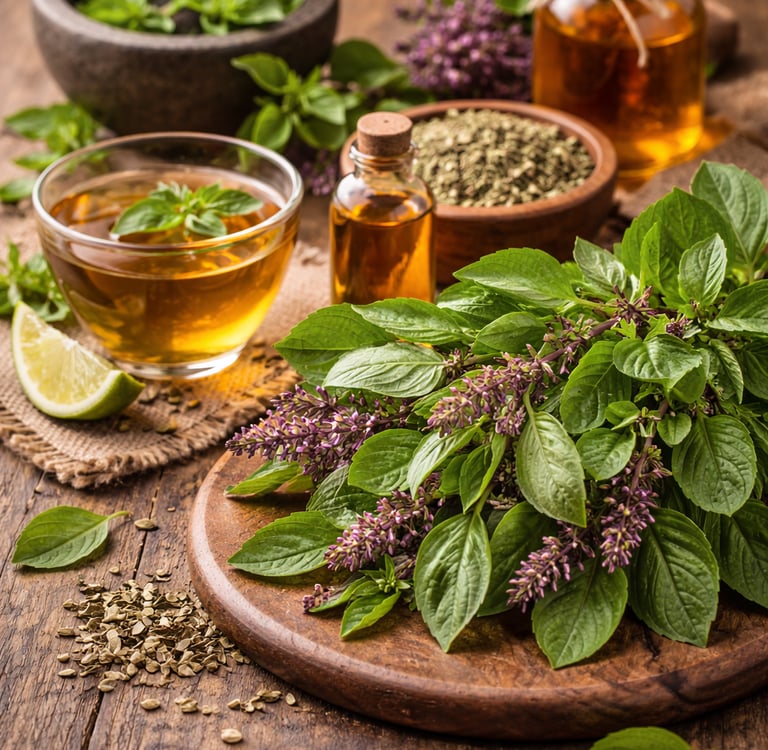
Holy Basil (Tulsi): Benefits, Uses, and How This Sacred Adaptogenic Herb Supports Stress Balance and Vitality
Holy basil, also known as Tulsi, is a revered medicinal herb traditionally used in Ayurvedic medicine to support stress resilience, immune health, and overall vitality. Derived from the plant Ocimum tenuiflorum (also called Ocimum sanctum), holy basil has been valued for thousands of years as both a healing herb and a sacred plant.
Often called the “Queen of Herbs” in Ayurveda, holy basil is known for helping the body adapt to stress while supporting mental clarity, energy balance, and immune function. Modern research continues to explore the plant’s bioactive compounds and their influence on the nervous system, inflammation, and metabolic health. In this article, we’ll explore what holy basil is, the key benefits of holy basil, how it works in the body, and how to use this traditional herb safely.
What Is Holy Basil?
Holy basil (Ocimum tenuiflorum) is a fragrant herb belonging to the mint family (Lamiaceae). Native to India and Southeast Asia, the plant is widely cultivated for both medicinal and spiritual purposes.
Unlike culinary basil, holy basil has a more complex flavor and a long history of use in Ayurvedic medicine.
The leaves of the plant are the primary medicinal part used in herbal preparations.
In traditional Ayurvedic systems, holy basil is considered an adaptogenic herb, meaning it helps the body adapt to stress and restore balance across multiple systems.
Today, holy basil is commonly consumed as herbal tea, capsules, tinctures, powders, and extracts.
The Benefits of Holy Basil
Supports Stress Resilience
One of the most well-known benefits of holy basil is its ability to help the body adapt to stress. Holy basil (Ocimum sanctum or Ocimum tenuiflorum), also known as tulsi, is considered a powerful adaptogenic herb in Ayurvedic medicine.
Adaptogens help regulate the body’s stress response systems, including the hypothalamic–pituitary–adrenal (HPA) axis, which controls cortisol and other stress hormones.
By helping maintain balanced cortisol activity and supporting the body’s natural stress-regulation mechanisms, holy basil may help promote resilience during periods of physical, emotional, or environmental stress.
Supports Nervous System Balance
Holy basil has traditionally been used to support calm mental clarity and emotional stability.
The herb contains bioactive compounds that may help regulate nervous system activity and support healthy neurotransmitter signaling. Balanced nervous system function plays an important role in mood regulation, focus, and emotional resilience.
By supporting neurological balance, holy basil may help promote relaxation while maintaining mental alertness and clarity.
Supports Immune System Health
Holy basil contains antioxidant and antimicrobial compounds that help support immune system function.
A healthy immune system depends on coordinated cellular responses that protect the body from pathogens and environmental stressors.
By supporting immune cell activity and providing antioxidant protection, holy basil may help strengthen immune resilience and support overall health.
Supports Healthy Inflammatory Balance
Holy basil contains plant compounds that may help regulate inflammatory signaling pathways in the body.
Inflammation is a natural biological process that supports immune defense and tissue repair. However, maintaining balanced inflammatory activity is essential for long-term wellness.
By supporting balanced inflammatory responses, holy basil may help promote healthy tissues and overall physiological stability.
Supports Respiratory Health
Traditional herbal practices have used holy basil to support respiratory comfort and healthy breathing.
The herb contains aromatic compounds that may help support lung function and soothe respiratory tissues. These properties have historically made holy basil a popular herb during seasonal respiratory challenges.
By supporting respiratory tissue health and balanced inflammatory activity, holy basil may contribute to improved breathing comfort and lung wellness.
Supports Metabolic Health
Some research suggests that holy basil may help support balanced blood sugar metabolism and metabolic health.
Balanced glucose levels are important for maintaining stable energy levels, healthy metabolism, and proper cellular function.
By supporting metabolic balance and glucose regulation, holy basil may contribute to improved metabolic stability and sustained energy.
Provides Antioxidant Protection
Holy basil contains powerful antioxidants such as flavonoids, phenolic compounds, and eugenol, which help neutralize free radicals in the body.
Free radicals are unstable molecules that can damage cells and contribute to oxidative stress. Over time, oxidative stress may affect tissues throughout the body and accelerate aging processes.
The antioxidants found in holy basil help support cellular protection, promoting long-term tissue health and physiological resilience.
Supports Energy and Vitality
Holy basil has historically been used to promote balanced energy levels and overall vitality.
Unlike stimulant-based energy boosters, holy basil helps support energy by improving stress resilience, supporting metabolic balance, and maintaining healthy nervous system function.
By supporting these interconnected systems, holy basil may help promote sustained physical and mental energy, contributing to overall vitality and long-term wellness.
Supports Stress Resilience
One of the most well-known benefits of holy basil is its ability to help the body adapt to stress. Holy basil (Ocimum sanctum or Ocimum tenuiflorum), also known as tulsi, is considered a powerful adaptogenic herb in Ayurvedic medicine.
Adaptogens help regulate the body’s stress response systems, including the hypothalamic–pituitary–adrenal (HPA) axis, which controls cortisol and other stress hormones.
By helping maintain balanced cortisol activity and supporting the body’s natural stress-regulation mechanisms, holy basil may help promote resilience during periods of physical, emotional, or environmental stress.
Supports Nervous System Balance
Holy basil has traditionally been used to support calm mental clarity and emotional stability.
The herb contains bioactive compounds that may help regulate nervous system activity and support healthy neurotransmitter signaling. Balanced nervous system function plays an important role in mood regulation, focus, and emotional resilience.
By supporting neurological balance, holy basil may help promote relaxation while maintaining mental alertness and clarity.
Supports Immune System Health
Holy basil contains antioxidant and antimicrobial compounds that help support immune system function.
A healthy immune system depends on coordinated cellular responses that protect the body from pathogens and environmental stressors.
By supporting immune cell activity and providing antioxidant protection, holy basil may help strengthen immune resilience and support overall health.
Supports Healthy Inflammatory Balance
Holy basil contains plant compounds that may help regulate inflammatory signaling pathways in the body.
Inflammation is a natural biological process that supports immune defense and tissue repair. However, maintaining balanced inflammatory activity is essential for long-term wellness.
By supporting balanced inflammatory responses, holy basil may help promote healthy tissues and overall physiological stability.
Supports Respiratory Health
Traditional herbal practices have used holy basil to support respiratory comfort and healthy breathing.
The herb contains aromatic compounds that may help support lung function and soothe respiratory tissues. These properties have historically made holy basil a popular herb during seasonal respiratory challenges.
By supporting respiratory tissue health and balanced inflammatory activity, holy basil may contribute to improved breathing comfort and lung wellness.
Supports Metabolic Health
Some research suggests that holy basil may help support balanced blood sugar metabolism and metabolic health.
Balanced glucose levels are important for maintaining stable energy levels, healthy metabolism, and proper cellular function.
By supporting metabolic balance and glucose regulation, holy basil may contribute to improved metabolic stability and sustained energy.
Provides Antioxidant Protection
Holy basil contains powerful antioxidants such as flavonoids, phenolic compounds, and eugenol, which help neutralize free radicals in the body.
Free radicals are unstable molecules that can damage cells and contribute to oxidative stress. Over time, oxidative stress may affect tissues throughout the body and accelerate aging processes.
The antioxidants found in holy basil help support cellular protection, promoting long-term tissue health and physiological resilience.
Supports Energy and Vitality
Holy basil has historically been used to promote balanced energy levels and overall vitality.
Unlike stimulant-based energy boosters, holy basil helps support energy by improving stress resilience, supporting metabolic balance, and maintaining healthy nervous system function.
By supporting these interconnected systems, holy basil may help promote sustained physical and mental energy, contributing to overall vitality and long-term wellness..
How Holy Basil Works (Science + Physiology)
Holy basil contains a wide range of bioactive compounds responsible for its health-supporting properties.
Important compounds found in holy basil include:
Eugenol
Rosmarinic acid
Ursolic acid
Linalool
Flavonoids
Polyphenols
Eugenol and rosmarinic acid have antioxidant and anti-inflammatory properties that help protect cells from oxidative stress.
Ursolic acid may support metabolic health and help regulate inflammatory signaling pathways.
Holy basil also influences the hypothalamic-pituitary-adrenal (HPA) axis, which regulates the body’s stress response.
By supporting balanced cortisol activity and neurotransmitter signaling, holy basil helps promote stress resilience and nervous system stability.
Through these mechanisms, holy basil supports emotional balance, immune function, metabolic health, and overall vitality.
Spiritual + Energetic Perspective
In Hindu tradition, holy basil is considered a sacred plant associated with purification, protection, and spiritual devotion.
Tulsi plants are often grown in homes and temples as symbols of harmony and spiritual protection.
Energetically, holy basil is believed to help balance the body, calm the mind, and uplift the spirit.
From a holistic perspective, the herb supports alignment between physical health, emotional clarity, and spiritual well-being.
How to Use Holy Basil
Holy basil can be used in several herbal preparations.
Common Forms
Holy basil is available as:
Dried leaf
Powder
Herbal tea
Capsules
Tinctures
Extracts
Tea Preparation
Holy basil tea can be prepared by:
Adding 1 teaspoon of dried holy basil leaves to hot water.
Steeping for 10–15 minutes.
Straining and drinking once or twice daily.
Holy basil tea is one of the most traditional ways to consume the herb.
Powder Use
Holy basil powder can be added to:
Smoothies
Herbal drinks
Warm water tonics
Typical daily amounts range from ½–1 teaspoon depending on the preparation.
Capsules or Extracts
Capsules and extracts offer convenient dosing and concentrated herbal support.
Always follow dosage instructions provided on the product label.
Safety, Side Effects, and Precautions
Holy basil is generally considered safe when used in normal herbal amounts.
Large doses may cause mild digestive discomfort in some individuals.
Individuals taking blood sugar medications should consult a healthcare professional.
Pregnant individuals should consult a healthcare provider before medicinal use.
Always follow recommended dosages.
Moderate use is typically well tolerated.
Tips for Beginners
If you’re new to holy basil, consider these tips:
Start with holy basil tea for gentle daily use.
Drink in the morning or afternoon for balanced energy.
Combine with herbs like ginger or lemongrass for flavorful blends.
Choose organic tulsi leaves or powder.
Use consistently to experience adaptogenic benefits.
Final Thoughts
Holy basil is one of the most respected herbs in Ayurvedic medicine for supporting stress resilience, immune health, and overall vitality. Its adaptogenic compounds help the body maintain balance during periods of stress while supporting nervous system stability and metabolic health.
Beyond its physical benefits, holy basil has long been honored as a sacred plant that promotes harmony between body, mind, and spirit.
When incorporated into daily routines through teas or herbal preparations, holy basil can support resilience, clarity, and long-term wellness.

Explore
Discover the latest in psychedelics, spirituality, and holistic practices.
Connect
MystiConnect Email:
Owners@MystiConnect.com
© 2026. All rights reserved.
Disclaimer:
The information provided on this website is for informational purposes only and is not intended as medical advice. We are not doctors, and none of the products or statements have been evaluated by the FDA. Always consult with a healthcare professional before starting any new health regimen.
Terms of service
Mystiphone... Coming Soon!