Explore And Heal Your Mind soul and body here at MystiConnect!

Understanding Herbal Energetics (Warm/Cool, Dry/Moist)
Two people can take the same herb and have completely different experiences. One feels relief. The other feels worse. This isn’t random—it’s energetics. Herbal energetics is the foundational framework used in traditional herbal medicine to understand how a plant moves, balances, and influences the body. Rather than asking only what symptom is present, energetics asks what pattern is underlying it. In this article, you’ll learn what herbal energetics are, how the warm/cool and dry/moist qualities work, and why understanding them is essential for safe, effective, and personalized herbal healing.
Landon Thorne
12/30/20252 min read
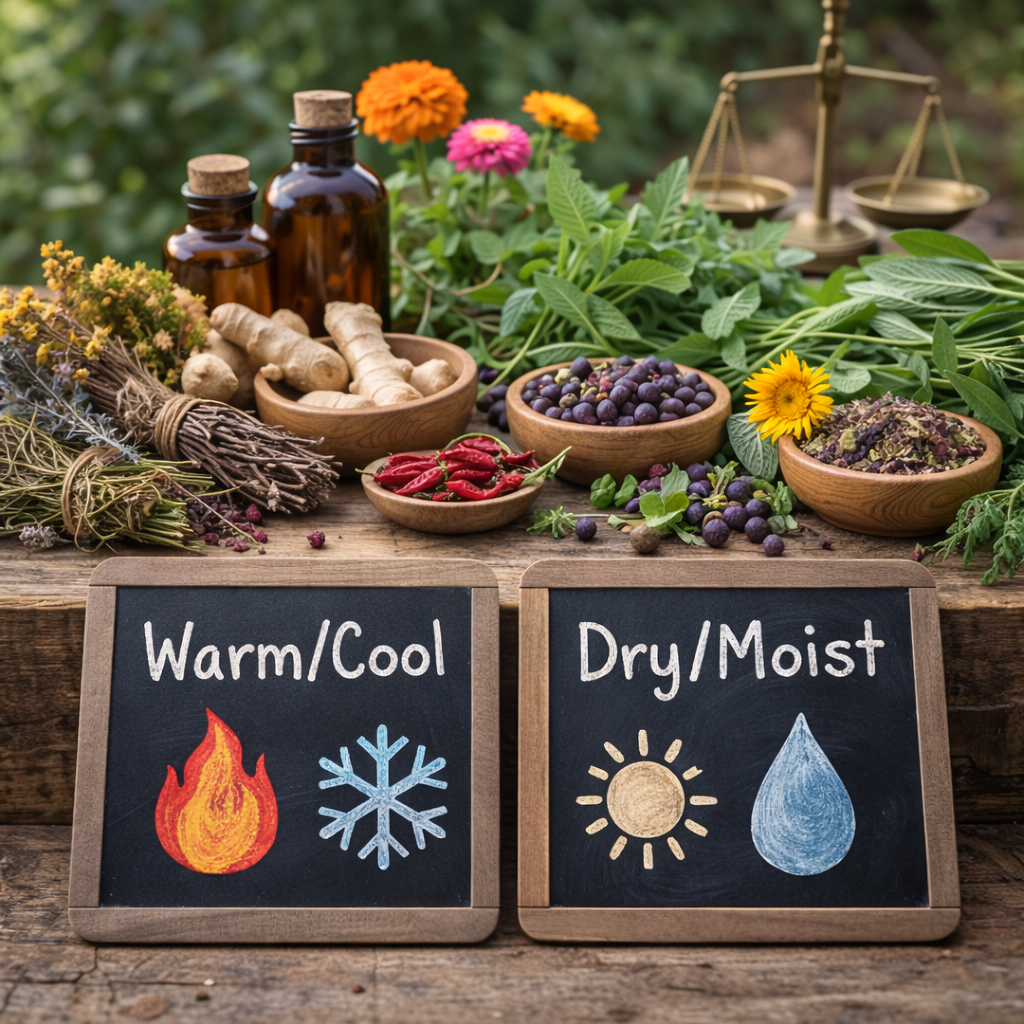
What Are Herbal Energetics?
Herbal energetics describe the qualitative effects an herb has on the body’s internal environment.
Instead of focusing on chemistry alone, energetics looks at how an herb:
Raises or lowers heat
Adds or removes moisture
Constricts or relaxes tissues
Moves or stabilizes energy
This system appears across cultures—Traditional Chinese Medicine, Ayurveda, Western herbalism, and Indigenous healing traditions—all recognizing that balance, not suppression, is the key to health.
The Warm ↔ Cool Spectrum
Every body has a thermal state. Some people run hot. Others run cold. Many fluctuate depending on stress, hormones, illness, or environment.
Warming Herbs
Warming herbs increase circulation, metabolism, and internal heat.
They are often used when there is:
Cold hands and feet
Sluggish digestion
Fatigue and low vitality
Sensitivity to cold
Slow metabolism
How warming herbs feel:
Increased circulation
Gentle stimulation
Feeling “more alive” or energized
Examples of warming actions:
Stimulating digestion
Increasing blood flow
Mobilizing stagnation
Warming does not mean stimulating like caffeine—it means restoring metabolic fire.
Cooling Herbs
Cooling herbs calm inflammation, excess heat, and overactivation.
They are often used when there is:
Inflammation
Heat sensations
Irritability or agitation
Redness or swelling
Stress-driven tension
How cooling herbs feel:
Calming
Soothing
Reducing intensity
Cooling herbs don’t weaken the body—they relieve excess so healing can occur.
The Dry ↔ Moist Spectrum
Moisture balance is just as important as temperature.
Drying Herbs
Drying herbs reduce excess fluids, mucus, and congestion.
They are often used when there is:
Excess mucus
Damp digestion
Swelling or edema
Sluggish lymphatic flow
Brain fog linked to heaviness
How drying herbs feel:
Clarifying
Lightening
Decongesting
Drying herbs must be used carefully—too much dryness can damage tissues.
Moistening Herbs
Moistening herbs restore fluids, lubrication, and tissue softness.
They are often used when there is:
Dry skin or eyes
Constipation from dryness
Dry cough
Nervous system depletion
Burnout and exhaustion
How moistening herbs feel:
Soothing
Nourishing
Restorative
Moistening herbs rebuild what stress, aging, or illness has depleted.
Why Energetics Matter More Than Symptoms
Two people can share the same symptom with opposite energetics.
Example: constipation
One person is constipated due to dryness → needs moistening herbs
Another is constipated due to stagnation → needs warming or moving herbs
Treating both with the same laxative ignores the underlying imbalance.
Herbal energetics prevent:
Overstimulating an already hot system
Drying out an already depleted body
Cooling someone who is already cold
This is why energetics are central to safe herbal practice.
Energetics Are Patterns, Not Labels
Energetics are dynamic, not fixed identities.
You may be:
Hot during stress, cold when exhausted
Dry in winter, damp in summer
Warm in digestion, cool emotionally
Herbal medicine works best when it responds to the current pattern, not a permanent label.
Combining Energetics in Formulas
Most herbal formulas intentionally balance energetics.
For example:
A warming herb may be paired with a moistening herb
A drying herb may be buffered with a cooling one
A stimulating herb may be grounded with a calming nervine
This synergy is what makes traditional herbal formulas effective and sustainable.
Spiritual + Energetic Perspective
On a deeper level, herbal energetics mirror emotional and psychological states.
Heat often reflects intensity, urgency, or excess
Cold often reflects withdrawal, fatigue, or stagnation
Dryness reflects depletion or rigidity
Moisture reflects nourishment, flow, and softness
Plants help restore balance physically and emotionally because these patterns are interconnected.
Energetics teach us to listen to the body rather than dominate it.
Tips for Beginners
Notice whether you tend toward heat or cold
Pay attention to dryness or congestion
Start with gentle herbs before strong ones
Avoid stacking multiple warming or drying herbs
Adjust seasonally—energetics shift with climate and stress
Learning energetics turns herbal medicine from guesswork into wisdom.
Final Thoughts
Understanding herbal energetics is one of the most important steps in becoming herb-literate.
It explains why herbs work, why they sometimes don’t, and how to use them safely for long-term health. Rather than forcing the body into submission, energetics teaches balance—responding intelligently to what the body is asking for in the moment.
Herbal medicine becomes truly powerful when we stop asking “What treats this symptom?” and start asking “What does this body need right now?”

Explore
Discover the latest in psychedelics, spirituality, and holistic practices.
Connect
MystiConnect Email:
Owners@MystiConnect.com
© 2026. All rights reserved.
Disclaimer:
The information provided on this website is for informational purposes only and is not intended as medical advice. We are not doctors, and none of the products or statements have been evaluated by the FDA. Always consult with a healthcare professional before starting any new health regimen.
Terms of service
Mystiphone... Coming Soon!