Explore And Heal Your Mind soul and body here at MystiConnect!

The Difference Between Tinctures, Teas, and Capsules
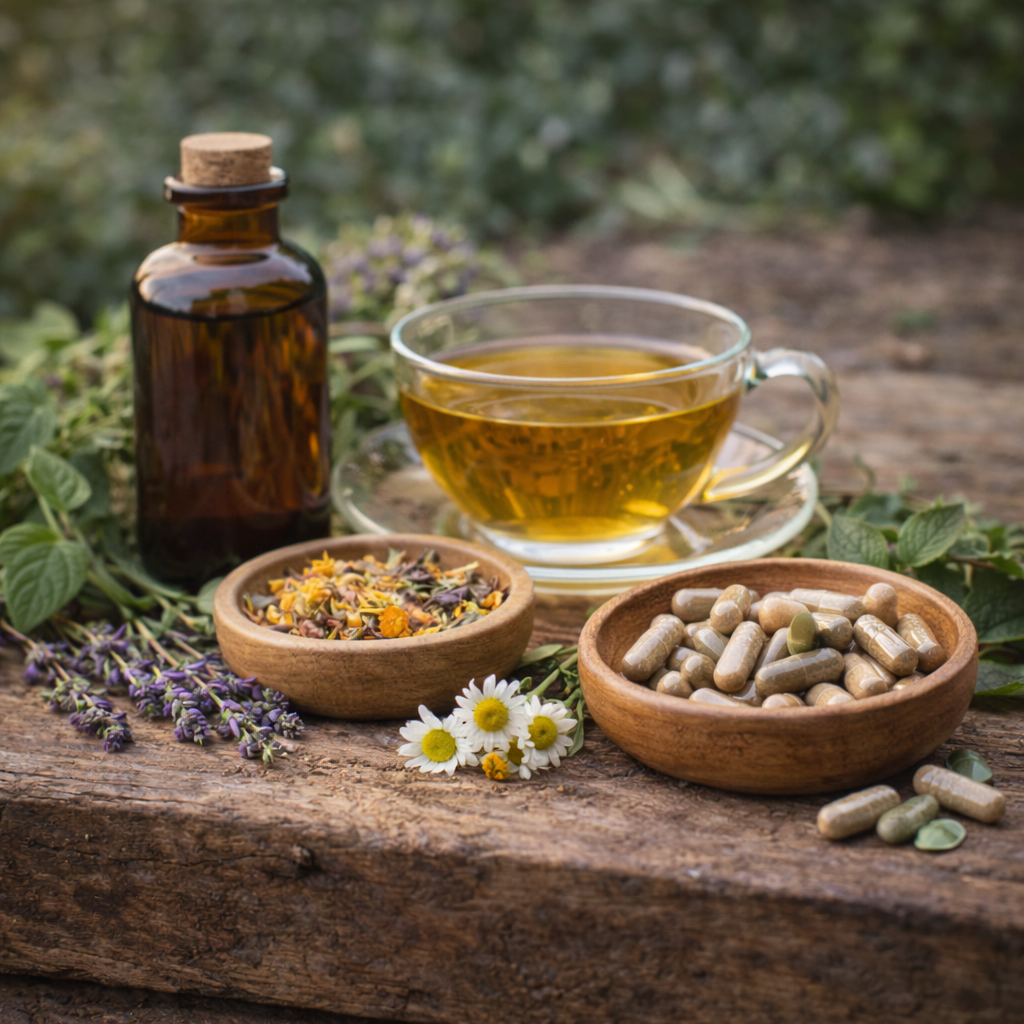
Herbs don’t just work because of what you take — they work because of how you take them. The same plant can act very differently depending on whether it’s brewed as a tea, extracted into a tincture, or swallowed as a capsule. Understanding the difference between tinctures, teas, and capsules is a foundational skill in herbal medicine and one of the biggest factors in whether an herb actually works for you. This article explains how each preparation works, when to use each one, and how to choose the right form for your body and your goals.
Landon Thorne
12/31/20252 min read
Why Preparation Method Matters
Herbs contain many different compounds:
Some are water-soluble
Some are alcohol-soluble
Some require heat or time to extract
Some absorb better through the mouth or digestion
Preparation determines:
What compounds you get
How fast they work
How strong they feel
Which systems they affect most
Choosing the wrong form can make a great herb feel weak—or overwhelming.
What Are Herbal Teas?
Herbal teas include infusions (leaves, flowers) and decoctions (roots, bark, mushrooms).
How Teas Work
Teas extract water-soluble compounds such as:
Minerals
Polysaccharides
Tannins
Gentle bitters
Because they are warm, hydrated, and slow, teas work deeply on:
Digestion
Nervous system
Immune system
Tissue nourishment
Benefits of Teas
Gentle and grounding
Excellent for daily use
Hydrating and nourishing
Ideal for long-term tonics
Limitations of Teas
Require time to prepare
Less concentrated
Not ideal for emergencies
Some herbs taste very bitter
Best for:
Daily support, nervous system care, digestion, long-term rebuilding, children, sensitive systems.
What Are Herbal Tinctures?
Tinctures are liquid extracts made using alcohol, glycerin, or vinegar.
How Tinctures Work
Alcohol extracts:
Alkaloids
Resins
Essential oils
Bitter compounds
Tinctures absorb quickly through:
The mouth (sublingual)
The digestive tract
This makes them fast-acting and potent.
Benefits of Tinctures
Rapid onset
Highly concentrated
Easy to dose precisely
Long shelf life
Portable and convenient
Limitations of Tinctures
Alcohol sensitivity for some people
Strong taste
Less hydrating than teas
Best for:
Acute stress, anxiety, pain, sleep support, digestion before meals, precise dosing.
What Are Herbal Capsules?
Capsules contain powdered whole herbs or extracts.
How Capsules Work
Capsules rely entirely on:
Digestion
Absorption in the gut
They bypass taste and mouth absorption and release herbs slowly.
Benefits of Capsules
Taste-free
Easy and familiar
Good for travel
Consistent dosing
Limitations of Capsules
Slower onset
Less effective if digestion is weak
Not ideal for acute needs
Some compounds absorb poorly in powder form
Best for:
Long-term protocols, people who dislike taste, structured routines, supplements taken with meals.
Speed of Action Comparison
Fastest: Tinctures
Moderate: Teas
Slowest: Capsules
Speed matters when choosing support for:
Anxiety or panic
Sleep
Pain or cramping
Acute illness
Strength vs Depth
This is an important distinction.
Tinctures = strength and precision
Teas = depth and nourishment
Capsules = consistency and convenience
Stronger doesn’t always mean better.
Deeper doesn’t always mean faster.
The right form depends on what the body needs.
Energetic Differences Between Forms
From an energetic perspective:
Teas are grounding, moistening, and supportive
Tinctures are penetrating, activating, and directive
Capsules are neutral and steady
This is why teas are often best for depleted states, while tinctures are better for stuck or acute patterns.
When One Form Works Better Than Another
Use Teas When:
The nervous system is depleted
You need hydration and nourishment
You’re building long-term resilience
Working with children or elders
Use Tinctures When:
You need fast relief
Symptoms fluctuate
Precision matters
You’re working acutely or episodically
Use Capsules When:
Taste is a barrier
Travel or routine matters
You’re on a structured long-term plan
Digestive strength is good
Many protocols use more than one form strategically.
Combining Forms Intelligently
Advanced herbalism often combines preparations.
Examples:
Tonic tea daily + tincture as needed
Capsules for baseline support + tea at night
Tincture before meals + tea afterward
This layered approach mirrors how the body actually heals—slowly and responsively.
Safety and Quality Considerations
Quality matters more than form
Poor tinctures are ineffective
Low-grade capsules may not absorb
Old herbs lose potency
Dosage varies by preparation
Always adjust dose based on form, not just the herb.
Tips for Beginners
Start with teas for foundational support
Add tinctures for acute needs
Use capsules only if digestion is strong
Don’t judge an herb by one preparation alone
Let the body guide the choice
Preparation is part of the medicine.
Final Thoughts
Tinctures, teas, and capsules are not interchangeable—they are different tools for different jobs.
When you understand how each form works, herbal medicine becomes precise instead of experimental. You stop asking “Does this herb work?” and start asking “Is this the right form for this moment?”
That shift is where real herbal mastery begins.

Explore
Discover the latest in psychedelics, spirituality, and holistic practices.
Connect
MystiConnect Email:
Owners@MystiConnect.com
© 2026. All rights reserved.
Disclaimer:
The information provided on this website is for informational purposes only and is not intended as medical advice. We are not doctors, and none of the products or statements have been evaluated by the FDA. Always consult with a healthcare professional before starting any new health regimen.
Terms of service
Mystiphone... Coming Soon!