Explore And Heal Your Mind soul and body here at MystiConnect!

Alcohol vs. Glycerin Extracts: Which Is Better?
Not all herbal extracts are created equal. One of the most common—and most misunderstood—questions in herbal medicine is whether alcohol-based tinctures or glycerin extracts are better. The truth is simple but nuanced: neither is universally better. Each extraction method pulls different compounds, acts differently in the body, and serves different people and purposes. This foundational guide explains how alcohol and glycerin extracts work, their strengths and limitations, and how to choose the right one for your needs.
Landon Thorne
12/31/20252 min read
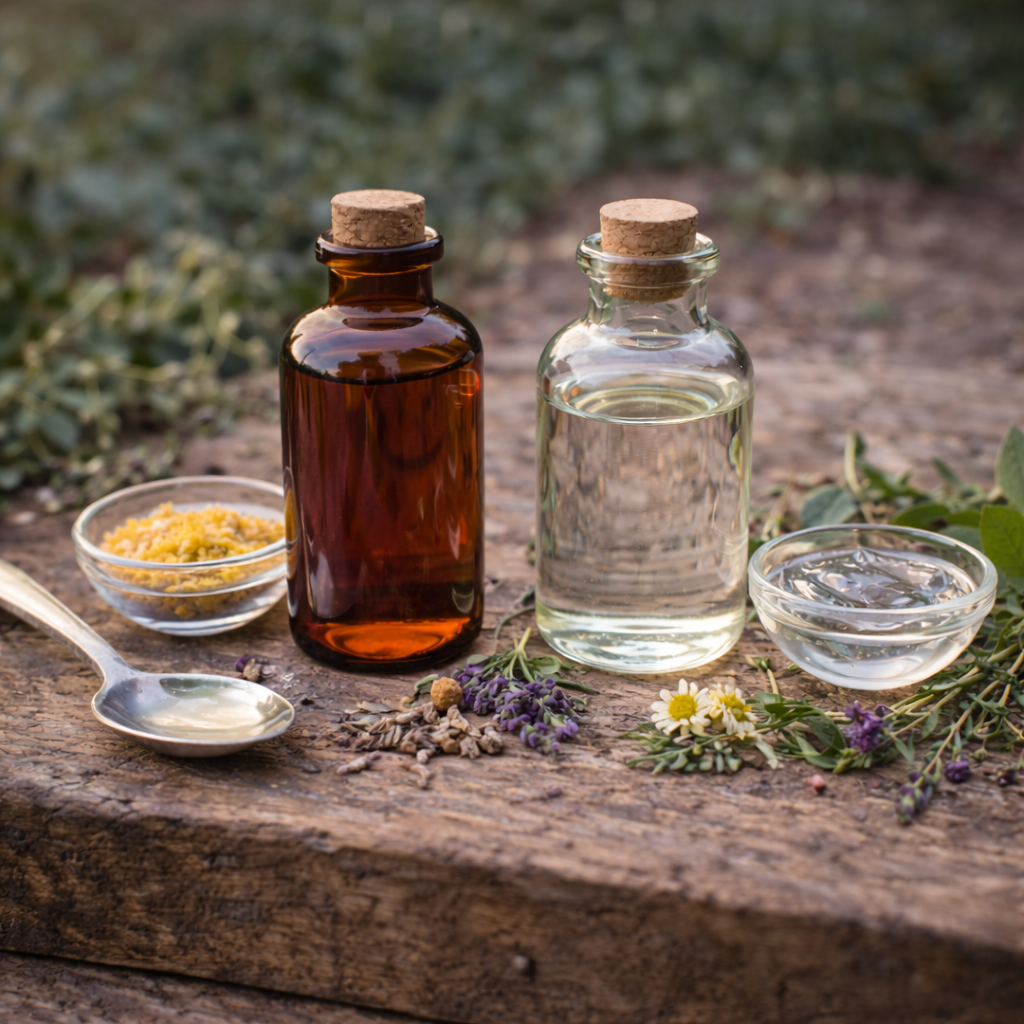
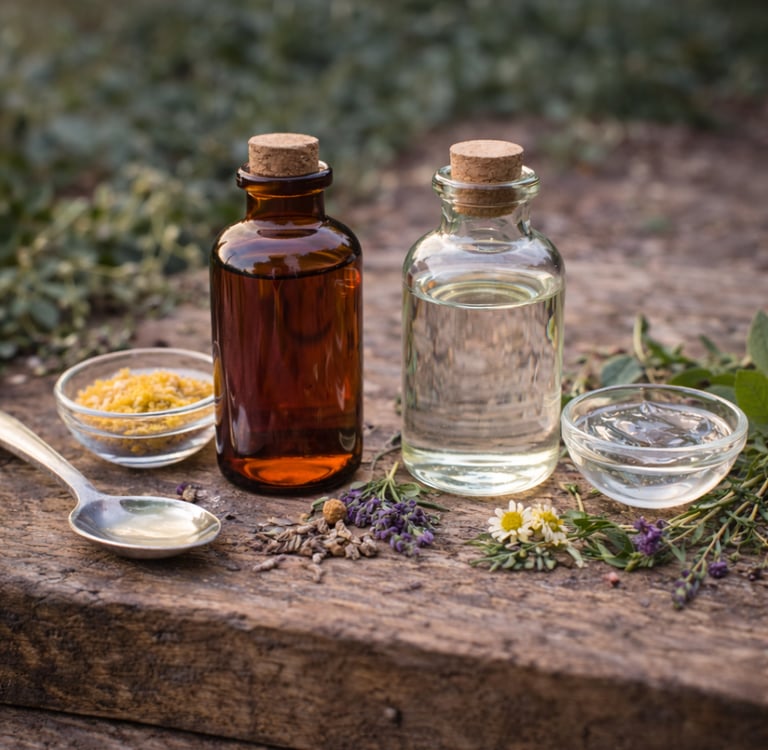
Why the Extraction Medium Matters
Herbs contain many types of compounds, and solvents determine what gets extracted.
Different solvents pull different phytochemicals:
Some compounds dissolve best in alcohol
Some dissolve best in water or glycerin
Some require heat, time, or specific polarity
The extraction medium directly affects:
Potency
Speed of action
Therapeutic range
Suitability for different bodies
So the question isn’t which is better—it’s which is appropriate.
What Are Alcohol Extracts?
Alcohol extracts (often called tinctures) use ethanol to pull medicinal compounds from plants.
How Alcohol Extracts Work
Alcohol is an excellent solvent for:
Alkaloids
Resins
Bitter compounds
Essential oils
Many flavonoids
Alcohol also preserves extracts extremely well and allows for fast absorption, especially when taken sublingually.
Benefits of Alcohol Extracts
Broad-spectrum extraction
Strong and reliable potency
Fast onset of action
Long shelf life (often years)
Precise dosing
Alcohol extracts are considered the gold standard in traditional Western herbalism for a reason—they extract the widest range of compounds.
Limitations of Alcohol Extracts
Alcohol sensitivity for some people
Not ideal for children or those avoiding alcohol
Strong taste
Can feel too stimulating for very sensitive nervous systems
Importantly, the amount of alcohol consumed per dose is usually very small—but perception and sensitivity still matter.
What Are Glycerin Extracts?
Glycerin extracts (also called glycerites) use vegetable glycerin as the solvent.
How Glycerin Extracts Work
Glycerin extracts:
Water-soluble compounds
Some bitters and tannins
Polysaccharides and gentle plant constituents
They are sweet, soothing, and slower-acting than alcohol tinctures.
Benefits of Glycerin Extracts
Alcohol-free
Pleasant taste
Gentle on digestion
Suitable for children and sensitive individuals
Moistening and soothing energetically
Glycerin extracts are often preferred for nervines, demulcents, and long-term gentle support.
Limitations of Glycerin Extracts
Narrower extraction range
Less potent for many herbs
Shorter shelf life
Slower absorption
Not ideal for resinous or alkaloid-rich plants
Glycerin is a good solvent—but not a universal one.
Potency Comparison
In general:
Alcohol extracts = stronger, broader, faster
Glycerin extracts = gentler, narrower, slower
This doesn’t mean glycerin extracts are weak—it means they are selective.
Some herbs perform beautifully in glycerin. Others lose much of their medicinal value without alcohol.
Energetic Differences Between Alcohol and Glycerin
From an energetic perspective:
Alcohol Extracts
Penetrating
Activating
Dispersing
Drying
They move herbs quickly and deeply into tissues.
Glycerin Extracts
Moistening
Nourishing
Soothing
Grounding
They support gentle, long-term regulation.
Neither is superior—they simply do different jobs.
Which Herbs Prefer Alcohol?
Alcohol extracts are generally best for herbs that are:
Bitter
Resinous
Alkaloid-rich
Aromatic
These herbs rely on compounds that glycerin cannot fully extract.
Which Herbs Work Well in Glycerin?
Glycerin extracts work best for herbs that are:
Gentle nervines
Demulcents
Mild tonics
Herbs intended for children or sensitive people
In these cases, glycerin is not a compromise—it’s a feature.
Safety and Use Considerations
Alcohol Extracts
Dose is small but relevant
Not ideal for those in recovery
Can be diluted in hot water to evaporate alcohol
Glycerin Extracts
Generally very safe
Higher doses often required
Must be stored properly
Quality matters more than solvent choice.
Which Is Better for Long-Term Use?
Both can be used long-term if chosen correctly.
Alcohol extracts are often better for deep systemic effects
Glycerin extracts are often better for gentle, nourishing support
Many protocols use both, depending on the herb and the person.
How Professionals Choose Between Them
Experienced herbalists consider:
The plant’s chemistry
The person’s sensitivity
The condition being addressed
Duration of use
Energetic needs
There is no one-size-fits-all answer—only intelligent matching.
Tips for Beginners
Don’t fear alcohol extracts automatically
Don’t assume glycerin is always safer
Match the extract to the herb and the body
Start low and observe response
Trust subtle feedback over assumptions
The best extract is the one the body can actually use.
Final Thoughts
The debate between alcohol and glycerin extracts misses the point.
Herbal medicine isn’t about choosing sides—it’s about choosing appropriately.
Alcohol extracts offer power, penetration, and precision.
Glycerin extracts offer gentleness, nourishment, and accessibility.
When used with understanding, both are valuable tools in a well-rounded herbal practice.

Explore
Discover the latest in psychedelics, spirituality, and holistic practices.
Connect
MystiConnect Email:
Owners@MystiConnect.com
© 2026. All rights reserved.
Disclaimer:
The information provided on this website is for informational purposes only and is not intended as medical advice. We are not doctors, and none of the products or statements have been evaluated by the FDA. Always consult with a healthcare professional before starting any new health regimen.
Terms of service
Mystiphone... Coming Soon!